
Published September 23, 2026 · Image is illustrative
A cassette does not reproduce a sound with surgical distance. It has a floor of hiss, a touch of compression, and edges that can seem to round themselves as the tape moves. Those imperfections explain some of its appeal to producers who want a beat to feel held rather than displayed behind glass.
It is easy to reduce tape to an effect: turn up the noise, blur the top end, call it warm. But warmth is a relationship among choices. A drum with no space around it can still feel cold after every filter in the room. A simple chord played at the right moment can feel intimate even in a clean recording. Tape texture helps most when the arrangement already has somewhere for it to live.
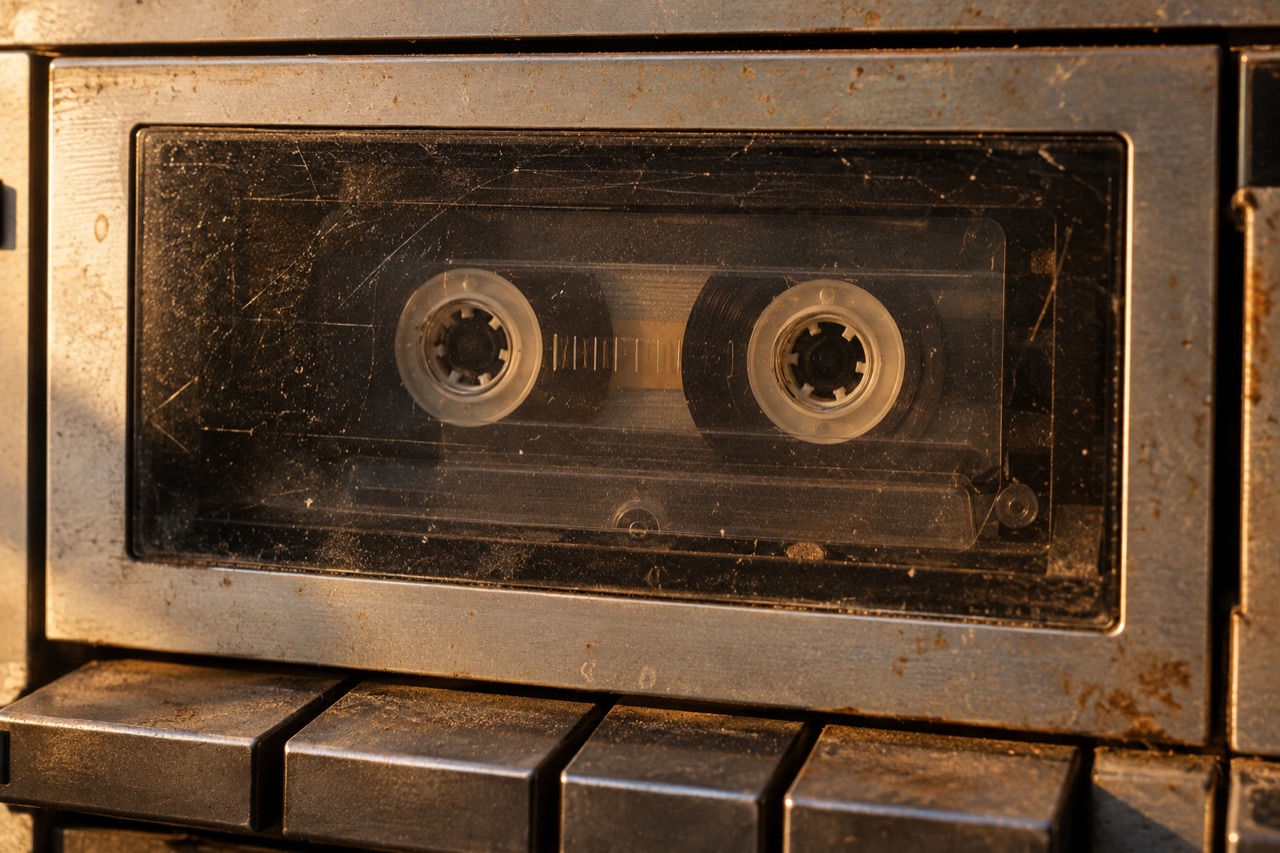
The used deck in the photograph is a reminder that tools age with the hands that operate them. Buttons loosen. Labels fade. A record button carries the memory of mistakes that were worth keeping. In a modern workflow, you can borrow that spirit without pretending every old machine is magic or every new one is sterile.
When Oso Melodic talks about dust, the point is not dirt for its own sake. It is the small evidence of time: the human edge that gives a groove a place to land. Listen for what a texture adds, and leave it out when the music is stronger without it.
Keep listening
Explore the instrumental world behind these stories.