
Published September 23, 2026 · Image is illustrative
A sampler can make almost anything playable: a keyboard chord, a hand clap, a passing voice, the creak of a room. Capturing it is the easy step. The creative step begins when you ask why that particular piece of sound belongs in the composition and what a new context can reveal inside it.
Shorten a phrase and its rhythm changes. Pitch it and a familiar source may become a new harmonic shape. Leave silence around it and the room tone becomes part of the beat. None of those moves guarantees originality. They are invitations to listen beyond the obvious and to make the result answer to a musical idea.
Sample-based music also carries responsibilities. A source has makers and a history; release plans may require permission or clearance. A respectful producer treats that as part of the craft, not paperwork added after the fun. Sampling can be a dialogue with musical memory while still honoring the people who made the source.
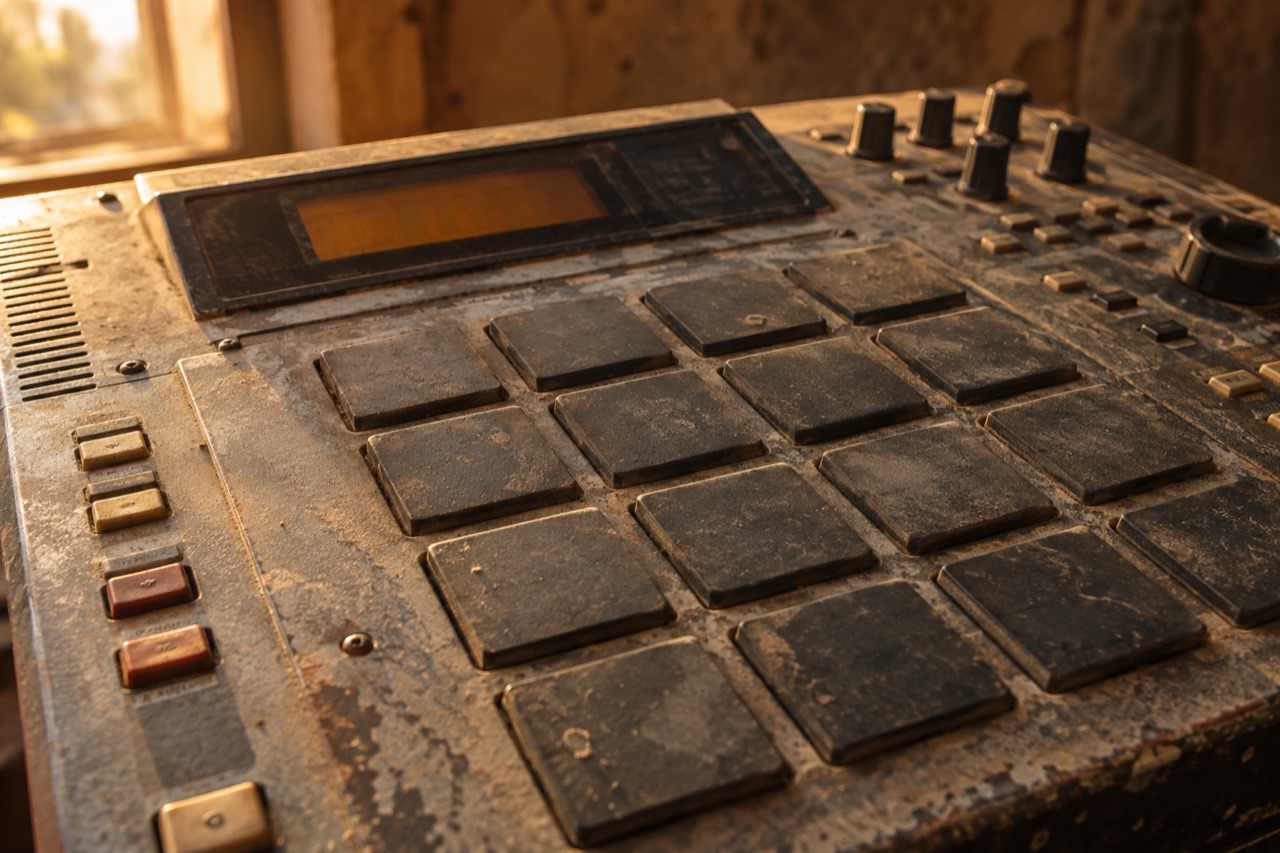
The small window and worn pads of a hardware sampler make the process tactile, but curiosity is portable. Oso Melodic’s sound points toward that durable question: what have we heard a hundred times, and what could we hear if we listened again?
Keep listening
Explore the instrumental world behind these stories.